

Chasing the Sun: The Ultimate Guide to the Poon Hill Sunrise Trek
There is a particular kind of tired that comes from standing in the dark on a stone staircase at 4:30 in the morning, breath fogging in front of your headlamp, legs aching from the day before, wondering if this was actually a good idea. And then there is what happens forty minutes later, when you crest the ridge at Poon Hill and the entire Annapurna range lights up gold in front of you, and every ounce of that tiredness turns into something closer to disbelief. If you have ever scrolled through a friend’s photos of Dhaulagiri and Annapurna South glowing pink at dawn and thought “I need to see that with my own eyes,” this guide is for you. The Poon Hill sunrise trek is one of the most rewarding short treks in Nepal, and by the end of this article you will know exactly how to plan it, what it costs, when to go, and how to make sure your one shot at that sunrise actually delivers.
Most people searching for a Himalayan trekking experience run into the same wall: limited vacation days, uncertainty about altitude sickness, and a genuine fear of committing thousands of dollars and two weeks of leave to something they’ve never tried before. The Poon Hill trek solves all three problems. It is short, it is achievable for most reasonably fit travelers, and it delivers a payoff that rivals treks three times its length. This is exactly why Lynx Adventure Tour, based right here in Nepal, sends more first-time trekkers up this route than almost any other.
What Makes the Poon Hill Sunrise Trek So Special
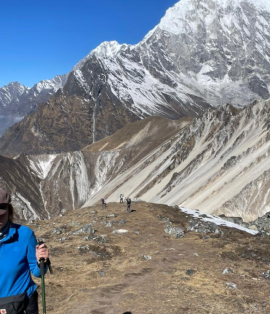
At 3,210 meters, Poon Hill sits inside the Annapurna Conservation Area, and from its summit you get an unbroken, 180-degree view of some of the tallest and most photographed mountains on Earth: Dhaulagiri, Annapurna I, Annapurna South, Machhapuchhre (the sacred Fishtail peak), Nilgiri, and Hiunchuli. What separates this viewpoint from other Himalayan panoramas is the angle and the accessibility together. You are not staring up at a single peak from a base camp; you are standing above a sea of clouds with an entire mountain range arranged in front of you, and you did not need three weeks or a high-altitude expedition permit to get there.
This is a Ghorepani Poon Hill trek at its core, meaning the route funnels through the village of Ghorepani, a stone-built settlement that has served trekkers and traders for generations, before the final pre-dawn push to the summit. The trek blends physical challenge, cultural immersion in Gurung and Magar villages, and one of the most photographed sunrises in the world, all inside a four-to-six-day window.
The Route: Day-by-Day Reality
Here is what the trek actually looks like on the ground, not the sanitized brochure version.
Day 1: Pokhara to Tikhedhunga or Ulleri
You’ll drive or ride roughly 90 minutes from Pokhara to the trailhead at Nayapul, then walk through farmland and forest along the Bhurungdi Khola river to Tikhedhunga or Ulleri. It’s a gentle warm-up day, and most trekkers underestimate how much it matters for acclimatizing their legs before the real climb begins.
Day 2: The Stone Staircase to Ghorepani
This is the day people talk about for years. From Ulleri, the trail climbs roughly 3,200 stone steps through rhododendron and oak forest to Ghorepani at 2,860 meters. It is relentless, it is humbling, and it is genuinely the hardest single stretch of the entire trek. Porters have hauled goods up this exact staircase for generations, and the trail is well-built, but nothing changes the fact that your quads will feel it for two days afterward. The upside: once you’re through it, everything else on the trek feels easier by comparison.
Day 3: Sunrise at Poon Hill, Then on to Tadapani
You’ll leave your tea house around 4:30 a.m. and climb for roughly 45 minutes to an hour to reach the summit before first light. This is the entire trek distilled into one hour, and it’s worth every step of the two days it took to get here. After sunrise and breakfast, most itineraries continue through rhododendron forest toward Tadapani.
Day 4: Ghandruk, the Gurung Heartland
The trail drops into Ghandruk, one of the most picturesque traditional villages in the Annapurna region, with slate-roofed houses and unobstructed views of Annapurna South and Machhapuchhre from the village itself.
Day 5: Back to Pokhara (or Extend to Jhinu Danda)
The final day descends to Nayapul for the drive back to Pokhara. Trekkers with an extra day often detour through Jhinu Danda, where natural hot springs along the Modi Khola river provide the single best reward for tired legs anywhere on this route.
Lynx Adventure Tour runs both the compact 4-day version and the fuller 6-day loop with the hot spring detour, depending on how much time you’ve got.
Best Time to Visit: Timing Your Sunrise Correctly
Weather is the single biggest variable standing between you and a perfect sunrise, so getting the season right matters more here than on almost any other Nepal trek.
- October–November (autumn): The gold standard, with the clearest skies and most reliable visibility of the year. This is peak season, so tea houses fill up fast and the summit gets crowded.
- March–April (spring): Nearly as reliable as autumn, and arguably more beautiful, since this is when the rhododendron forests along the trail explode into red and pink bloom.
- December–February (winter): Cold, especially overnight in Ghorepani, but skies are often razor-sharp and the trail is quiet. A strong choice if solitude matters more to you than warmth.
- June–September (monsoon): Generally avoided. Cloud cover regularly blocks the sunrise entirely, and the trail turns slippery and leech-prone.
If your schedule allows it, build in one buffer day near Ghorepani. A second sunrise attempt has saved more than a few Lynx Adventure Tour clients from missing the view entirely due to one cloudy morning.
Poon Hill Trek Cost Breakdown
One of the most searched questions about this trek is simply what it costs, so here’s a realistic breakdown for a guided trek through a Nepal-based operator like Lynx Adventure Tour.
- Guided package (4–6 days, including guide, permits, and tea house accommodation): typically ranges from roughly $250 to $500 USD per person, depending on group size and trip length
- ACAP and TIMS permits: usually bundled into your package, but independently priced around $20–30 USD combined
- Meals along the trail: $5–10 USD per meal if not included in your package
- Porter (optional but recommended): roughly $15–20 USD per day
- Hot showers, charging, and Wi-Fi at tea houses: small additional fees, generally $1–5 USD per use
- Tips for guides and porters: budget an additional $30–50 USD per trekker for the full trip
Independent trekking without a guide is technically permitted and can lower costs somewhat, but factor in the value of local weather knowledge, permit handling, and safety support before deciding to go it alone.
Packing List: What You Actually Need
- Sturdy, already broken-in hiking boots
- Layered clothing: moisture-wicking base layer, fleece or down mid-layer, waterproof outer shell
- Warm hat, gloves, and a reliable headlamp with spare batteries
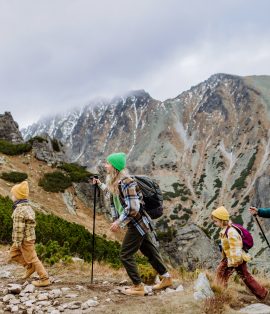
- Trekking poles, especially useful on the Ghorepani staircase
- A daypack with a rain cover
- Reusable water bottle plus purification tablets or a filter
- Basic first-aid kit and any personal medication
- Nepali rupees in cash, since card payments are unreliable once you leave Pokhara
Safety Tips for the Poon Hill Trek
- Acclimatize even at moderate altitude. Poon Hill’s elevation is lower than trekking peaks like Everest Base Camp, but altitude effects can still appear above 3,000 meters. Drink water consistently and pace yourself on the staircase days.
- Trek with a licensed guide. A local guide can read incoming weather, manage permit checkpoints, and adjust your itinerary if someone in your group is struggling.
- Check the forecast the night before summit morning. Guides based in the region, like those at Lynx Adventure Tour, often have a better read on local cloud patterns than any app.
- Dress for near-freezing temperatures at the summit, even in warmer trekking seasons, since pre-dawn temperatures at 3,210 meters drop well below daytime highs.
- Carry a basic first-aid kit and inform your guide immediately about any symptoms of altitude discomfort, however mild.
Frequently Asked Questions
How difficult is the Poon Hill sunrise trek? It’s considered moderate. The stone staircase to Ghorepani is physically demanding, but no technical climbing skill or prior high-altitude experience is required.
How many days does the Poon Hill trek take? Most itineraries run 4 to 6 days round-trip from Pokhara, depending on whether you add the Jhinu Danda hot springs extension.
What is the best time to trek Poon Hill for sunrise views? October to November and March to April offer the clearest skies and the most reliable sunrise visibility.
Do I need a permit for the Poon Hill trek? Yes. You’ll need an ACAP (Annapurna Conservation Area Permit) and a TIMS card, both of which Lynx Adventure Tour arranges as part of every guided package.
Is the Poon Hill trek suitable for beginners? Yes, it’s one of the most beginner-friendly multi-day treks in Nepal, making it a popular choice for first-time trekkers and families with older children.
Ready to Chase Your Own Sunrise?
Reading about that first light hitting Dhaulagiri is one thing. Standing on that ridge yourself, watching the Annapurna range turn gold while the whole hillside goes silent around you, is a completely different experience — and it’s one that’s genuinely within reach in as little as four days. Lynx Adventure Tour has been guiding trekkers up this exact route for years, with local Gurung and Magar guides who know these mountains, all your permits handled before you land, and flexible 4- to 6-day itineraries built around getting you the best possible shot at that sunrise. Reach out to Lynx Adventure Tour today, and let’s find your dates.



Comments are closed